

The Israeli Pilots Association magazine
Within less than a week, two pilots at well-known, scheduled airlines tested positive for drugs during flight operations * Studies show that smoking, alcohol, and drugs across the entire spectrum impair a pilot's cognitive abilities and performance: response time, decision-making, and situational awareness * The numbers are very low, but they are not zero.
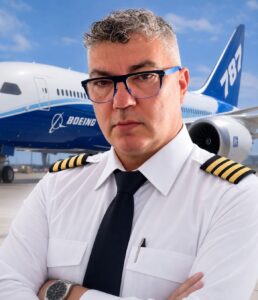
On July 31st of this year, customs officials at Soekarno-Hatta International Airport in Jakarta, Indonesia, were x-raying the passenger baggage of flight MH727, which had just landed from Kuala Lumpur, Malaysia, when they detected a suspicious suitcase. The person who arrived shortly thereafter to collect the suitcase was none other than the aircraft's pilot. He was immediately taken to a side inspection room for a search, where investigators were astonished to find no fewer than 14 giant packages containing over 70,000 ecstasy pills (with a total weight of about 26 kg), alongside a package of methamphetamine.
A few days later, on August 4th, during Air India flight AI2379 from Phuket, Thailand to Delhi, an Airbus A320 experienced a sudden altitude change during cruise. This dramatic event resulted in injuries to 20 passengers and 4 crew members, with two of the crew suffering severe spinal injuries in the neck and tailbone areas. Tests conducted immediately after landing revealed that the pilot tested positive for drugs. The malfunction was apparently the result of a momentary flight computer failure and was not influenced by the pilot's condition, but the discovery itself caused shock waves.
Drugs and alcohol have always been a "sexy" topic when it comes to pilots. We all remember "Flight", the Denzel Washington film, which deals with exactly that. Headlines love stories about a drunk pilot in the cockpit, but the real picture is more complex, and the data tells a different story. The issue at hand is flight safety, and the term tied to it and embedded within it is Safety Culture. Flight safety is the primary goal and objective of every airline.
What the Numbers Say
The most detailed data comes from the US, where the Federal Aviation Administration (FAA) mandates random testing for all safety-sensitive personnel. In 2015, approximately 56,000 random alcohol tests were conducted, and only ten pilots were found above the threshold – a mere 0.017%. Since the random testing program began in 1995, an average of about 11 pilots fail per year. In drug tests as well, which screen for marijuana, opiates, cocaine, amphetamines, and PCP, the rate of positive findings in 2015 was identical: 0.017%.
The numbers are very low, but they are not zero, and there is a trend worth noting: the number of pilots testing positive in drug tests rose from 23 in 2010 to 38 in 2015.
A more concerning picture emerges from accident investigations. A National Transportation Safety Board (NTSB) report published in May 2026 examined pilots killed in accidents in the US between 2018 and 2022. Among them, 28.6% were found to have substances that could impair performance, and the rate of illegal drugs rose to 7.4%, mainly due to an increase in cannabis traces (THC). Surprisingly, the most common substance in this category was a sedating antihistamine, diphenhydramine. This is a reminder that even an innocent over-the-counter medication from the pharmacy shelf can affect us.
It is important to put the data into the proper context. The rate of substance presence was lower among pilots holding an airline transport pilot (ATP) or commercial license, and among pilots with a valid medical certificate. Furthermore, a positive finding does not prove that the pilot was under the influence at the time of the accident. Since 1990, the NTSB has determined that drug impairment was a cause or contributing factor in about 3% of fatal accidents in civil aviation.
A Changing Environment, Stricter Enforcement
Environmental conditions have been changing rapidly in recent years, and so has the approach to the issue. Enforcement has been tightened for good reason, both for deterrence and prevention. As with any safety matter, we will never know how much or what we prevented thanks to the actions we take.
There are cultural and regulatory differences between countries. In the US, it is forbidden to fly with a blood alcohol concentration (BAC) of 0.04% or higher, while in the UK, the threshold is stricter, standing at 0.02%. For comparison, the legal driving limit for cars in the US is 0.08%. The FAA also mandates a waiting period of at least eight hours between the last drink and the flight, summing it up with the phrase "Eight hours from bottle to throttle."
Differences are also evident in the approach to marijuana, especially medical marijuana. Legalization in many US states has not changed its status for pilots, where it remains a prohibited substance. Pilots using medical marijuana are required to report it to the authorities.
Studies show that smoking, alcohol, and drugs across the entire spectrum impair a pilot's cognitive abilities and performance: response time, decision-making, and situational awareness. Every self-respecting airline is required, by regulation, to instruct and emphasize the effects of these substances on us as pilots, including prescription and over-the-counter medications. Enforcement has also become stricter: more inspections, and more pilots caught red-handed and having their licenses revoked.
Asking for Help Is Not a Weakness
Pilots who need assistance can turn to professionals or peer support, such as the "Re'ut" program of the Pilots Association or any Peer-to-Peer program available to them. International experience shows that this works: since the 1970s, about 5,300 pilots in the US have undergone rehabilitation under a program backed by the union and returned to flying—more than a hundred a year. Those who ask for help in time protect both themselves and their passengers.
Flight safety is the guiding light for the entire aircraft crew, pilots and flight attendants alike. Drugs—both light and hard—and alcohol harm the individual, but more than that, they pose a risk to flight safety. The numbers show that the vast majority of pilots follow the rules, and our job is to ensure it stays that way.
Fly safe,
Captain Hagai Mayer
Chairman of the Israel Pilots Association