

The Israeli Pilots Association magazine

Israel’s aerospace and defense industries have established a highly visible presence at this year’s Farnborough International Airshow despite the political and security challenges of the current period. In sharp contrast to the deeply objectionable treatment Israel received from the French authorities at defense exhibitions in France, including the Paris Air Show, Euronaval and Eurosatory, the United Kingdom opened its doors to the Israeli defense industry.
Leading companies including Israel Aerospace Industries, Elbit Systems, Rafael, Aeromaoz, UVision and TSG are presenting a broad range of advanced systems at Farnborough in the fields of unmanned aircraft, air defense, precision weapons, electronics, space and AI-based solutions.
For the Israeli companies, the exhibition represents a strategic opportunity to expand international cooperation, promote new business and present customers from around the world with operational and technological capabilities that have been proven in combat in recent years. Their presence at Farnborough underlines Israel’s standing as one of the world’s leading technology powers in aerospace and defense, as well as the continuing global demand for Israeli-developed solutions.
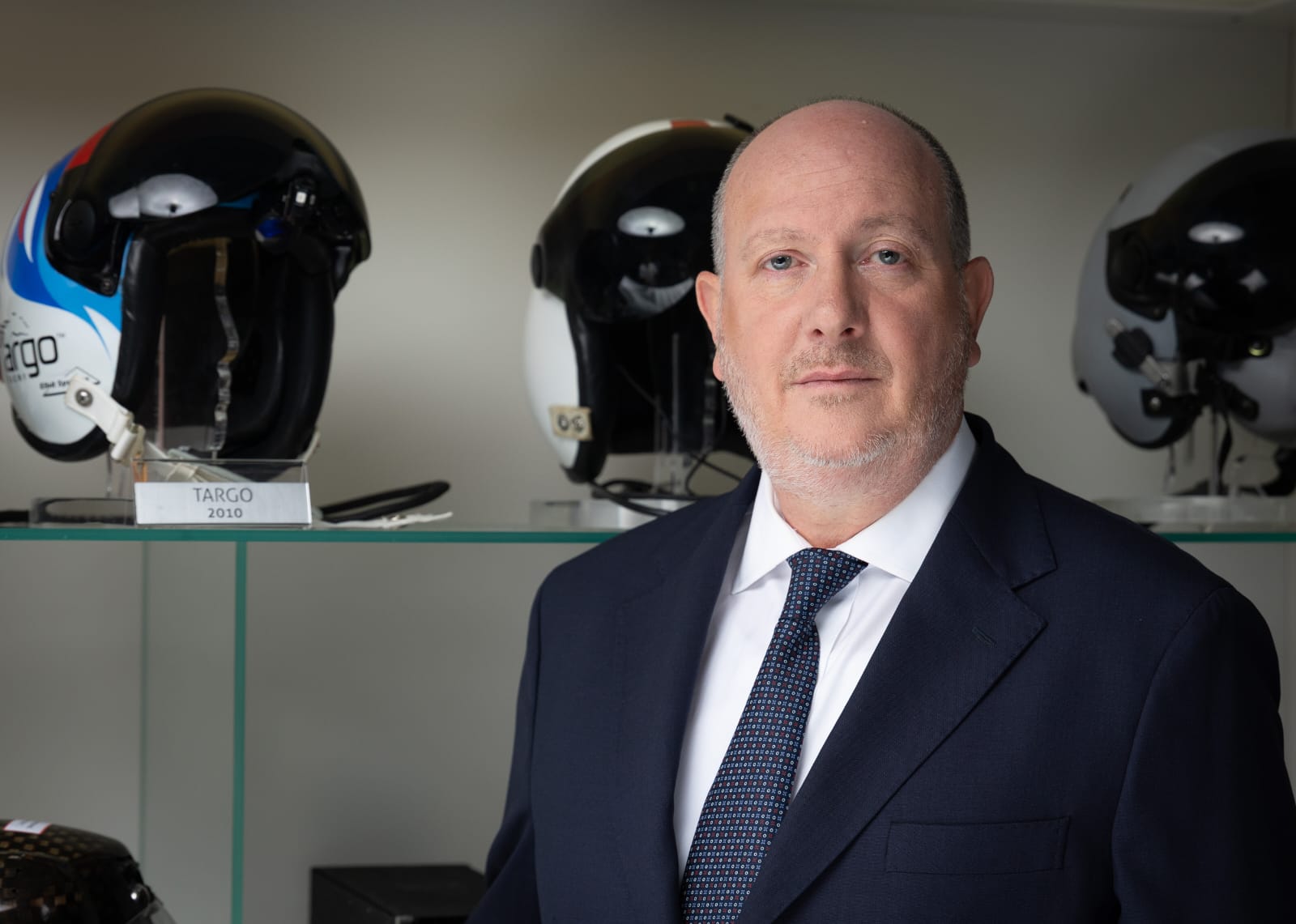
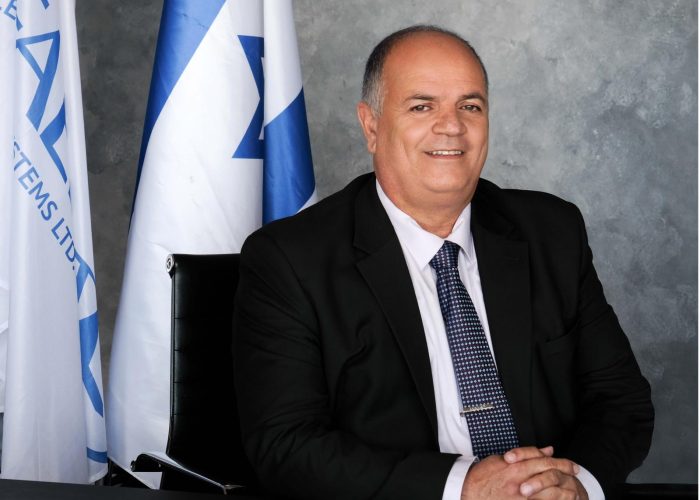
During the show, I interviewed several senior executives from Israel’s defense industry.
Responding to reports suggesting that Israel had approached a critical threshold in its missile inventories during the war, Rafael CEO Yoav Turgeman said that despite the war, Rafael had doubled production of Tamir interceptors for the Iron Dome system and was meeting all requirements set by Israel’s Ministry of Defense.
Asked about reports of possible future production of Tamir interceptors in India, he said: “The Indians have not yet purchased Iron Dome. I assume that when they do, they will manufacture certain parts of it.”
Rafael arrived at Farnborough on the back of proven operational successes by several of its systems. These included the company’s SPICE 250 precision-guided weapons, whose extensive use in the war against Iran was disclosed in recent days, as well as a Royal Air Force announcement issued one day before the opening of the show concerning the interception of a UAV over Jordan.
According to the RAF, the engagement involved a Rafael LITENING 5 targeting pod. The advanced pod guided the British weapon onto the target with high precision and enabled its destruction.
The fifth generation of the LITENING system can support not only relatively expensive air-to-air missiles but also much lower-cost rockets. This capability addresses a growing economic challenge for armed forces worldwide as drones and UAVs occupy an increasingly prominent role on the battlefield.
Regarding competition with Turkey’s defense industry, which has attracted growing attention recently, Turgeman said:
“I don’t think we and the Turks occupy the same space. I think they are more in the low-cost segment, while we are more in the high-performance segment.
“The international defense market is characterized by intense competition. Different countries emphasize different things. For some countries, cost is the critical factor. Others understand that they cannot afford to buy something cheap, because in the end, cheap can become very expensive.
“They have an industry that is heavily subsidized by the state, unlike ours, and they are trying to compete wherever they can.”
Asked about Rafael systems’ performance during the war, Turgeman said he was “very pleased with the way the systems performed,” adding that Iron Dome and David’s Sling had achieved interception rates “close to 100 percent.”
He declined to provide precise figures “for obvious reasons.”
Elbit Systems
Another highly visible Israeli company at Farnborough was Elbit Systems.
Elbit is developing a new UAV, the Hermes 650, including for the Israel Defense Forces. The aircraft belongs to the roughly half-ton class.
“This will be a workhorse—and militaries need workhorses,” said Ran Kril, Executive Vice President for International Marketing at Elbit Systems.
“We are among the few companies in the world that still believe in the half-ton category. Most others have moved toward the extremes – either 100 kilograms or five tons. The smaller systems are limited in payload, while the larger ones are very expensive.
“You therefore need a system that can be produced in significant quantities and still deliver the required operational results.”
Around the new UAV, Elbit has developed an interesting concept that it calls a “UAV carrier”—a long-range operational architecture designed to provide persistent protection for national assets.
One example presented is Portugal and the Azores, where such a concept could provide constant presence. The idea is to deploy UAVs aboard civilian or military vessels patrolling around the islands, thereby reducing the need for a permanent land-based presence or for US-style aircraft carriers.
Another advanced system displayed at the show was the Zero-G helmet.
Without delving too deeply into the underlying technology, the helmet is based on technologies originally developed by Elbit for the F-35 and subsequently adapted for use on earlier-generation, fourth-generation aircraft such as the F-16.
The helmet is significantly lighter than the F-35 helmet system, provides the pilot with a full-color display and brings selected fifth-generation capabilities into a fourth-generation cockpit.
Kril also discussed the laser component Elbit is developing for Rafael’s high-energy laser defense program.
According to Kril, Elbit is also developing mobile variants of the technology for installation on helicopters and fighter aircraft.
“During next year, development of the airborne laser demonstrator, ‘Sting,’ intended to intercept UAVs and drones, will be completed,” Kril said.
Elbit is developing two airborne laser systems: XCalibur, intended for fighter aircraft, and Sting, designed for helicopters. Both are intended to address emerging threats that have become increasingly apparent during the nearly three years of continuous war Israel has faced.
These podded systems are designed to intercept threats such as UAVs, drones and cruise missiles using directed-energy weapons.
The project is based on the laser engine developed by Elbit for the ground-based Iron Beam system, which is being developed by Rafael. Israel’s Ministry of Defense has already signed a formal contract with Elbit for the integration of these systems onto Israeli Air Force aircraft.
Major US Contracts
At the opening of the exhibition, Elbit announced that its US subsidiary, Elbit Systems of America, had been awarded several contracts by US Customs and Border Protection with a combined value exceeding $370 million, aimed at strengthening US homeland security.
The specific systems covered by the contracts were not disclosed, but the work is expected to continue through May 2029.
Bezhalel “Butzi” Machlis, President and CEO of Elbit Systems, said:
“These new awards demonstrate Elbit America’s continued contribution to strengthening US security and defense capabilities. Our advanced, combat-proven technologies are designed to provide reliable real-time situational awareness and help our customers address complex operational challenges.”
Security Concerns in the UK
On attacks against Elbit facilities in Britain by pro-Palestinian groups, Kril said:
“We have hundreds of employees in the UK across several sites, some of which are under threat. Naturally, we are investing considerable resources in the security of our employees, and we hope the situation will change soon.
“There is a gap between these demonstrations and the treatment we receive from the authorities. We feel that they listen to us and understand our security requirements.”
Pro-Palestinian groups also attempted to stage provocations outside the Israeli companies’ stands at Farnborough."
Some of the Israeli exhibitors were subject to pro-Palestinian Harrases. "During the exhibition, groups of pro-Palestinian activists came to the Israeli stands several times and tried to provoke incidents,” disclosed an Israeli representative at one of the stands, who asked not to be identified.
“They were usually groups of three or four. They would position themselves opposite the stand—they were, of course, not allowed to approach—switch on a camera and begin shouting verbal abuse: ‘Free Palestine,’ ‘How many babies did you kill today?’ and similar remarks.
“They try to provoke us, but we do not respond, and after a short while they leave.”
The representative stressed that these incidents stood in complete contrast to the attitude shown toward Israel and Israeli exhibitors by the Farnborough organizers, which she described as “excellent.”