

The Israeli Pilots Association magazine

On October 7, 2023, perhaps for the first time since the Yom Kippur War, the Israeli Air Force found itself at the center of intense public criticism. It was not because it had lost a battle or surrendered its operational superiority. Rather, for years the IAF had been perceived by many Israelis as a kind of ultimate shield-a force capable of seeing everything, reaching anywhere, and providing warning against any threat. Hamas’s surprise attack exposed, at least in the public consciousness, the limitations of that perception.
During those difficult days, it often seemed as though the Air Force’s prestige had been diminished. Many questioned how a terrorist organization had managed to launch such a large-scale attack without the Air Force preventing it beforehand. Others asked how it had failed to stop the assault once it was underway. Still others wondered whether the era in which air power could decisively shape military campaigns had finally come to an end.
Two and a half years later, the picture looks dramatically different.
Not only did the Air Force recover from the trauma, but during 2025 and 2026 it delivered a series of operational achievements that may one day be remembered as one of the most impressive periods in its history.
The campaign known as “Am K’lavie” (“Rising Lion”) during 12 days of June 2025 was the moment when the Air Force once again transformed itself from a symbol of unanswered questions into a symbol of capability.
The world watched as hundreds of Israeli fighter aircraft operated thousands of kilometers from home, striking strategic targets deep inside Iran, destroying air-defense systems, command centers, military infrastructure, and facilities connected to Tehran’s nuclear program. For the first time in the history of the Middle East, a regional air force operated with near freedom over one of the largest, most populous, and most heavily defended countries in the region.
The achievement was not merely the attack itself, but the manner in which it was executed.
For decades, Iran’s surface-to-air missile network had been regarded as one of the principal obstacles to any potential strike. On paper, Tehran possessed hundreds of launchers, Russian and indigenous air-defense systems, radar networks, and command-and-control centers designed to prevent hostile aircraft from penetrating Iranian airspace.
In practice, during the campaign against Iran, the Israeli Air Force – working in close coordination with intelligence organizations, electronic warfare units, and other elements of Israel’s defense establishment-managed to dismantle significant portions of Iran’s air-defense network and achieve a level of operational freedom that few believed possible.
In many ways, it represented a modern return to the foundational doctrine upon which the Air Force was built during the era of commanders Motti Hod and Benny Peled: first achieve air superiority, and only then strike strategic targets deep inside enemy territory.
The second campaign, “Roar of the Lion,” (called in the US "Epic Fury") further reinforced the perception that the Air Force had entered a new era.
Beyond the strikes themselves, the campaign revealed a much broader systemic capability: the integration of stealth fighters, unmanned aerial systems, intelligence aircraft, satellites, cyber capabilities, and artificial intelligence into a multidimensional operational framework unlike anything previously seen in Israeli military history.
For the first time, it also showcased an unprecedented level of operational coordination with the United States Air Force. The partnership functioned flawlessly, demonstrating a degree of interoperability that impressed even Israel’s closest military partners.
The change of command at the top of the Air Force also symbolized the transition from one era to another.
Major General Tomer Bar, who led the Air Force through one of the most difficult periods in the country’s history, transferred command this year to Major General Omer Tishler.
Bar will likely be remembered as the commander who faced an almost impossible challenge: rebuilding Israel’s air deterrence after October 7 while simultaneously managing a prolonged, multi-front campaign that lasted for many months.
Tishler inherits an Air Force that is strong, experienced, and confident – but one that also faces entirely new challenges.
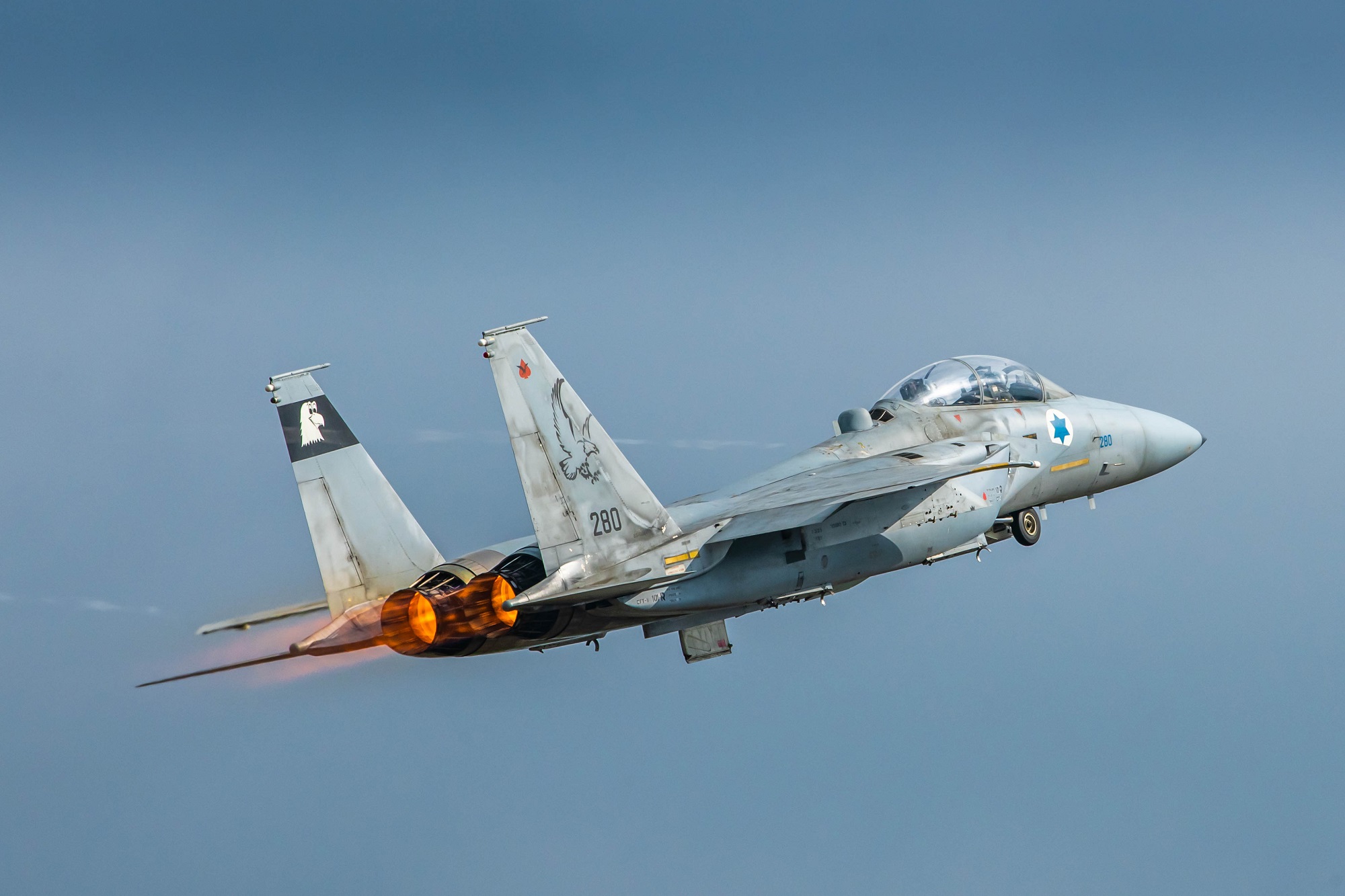
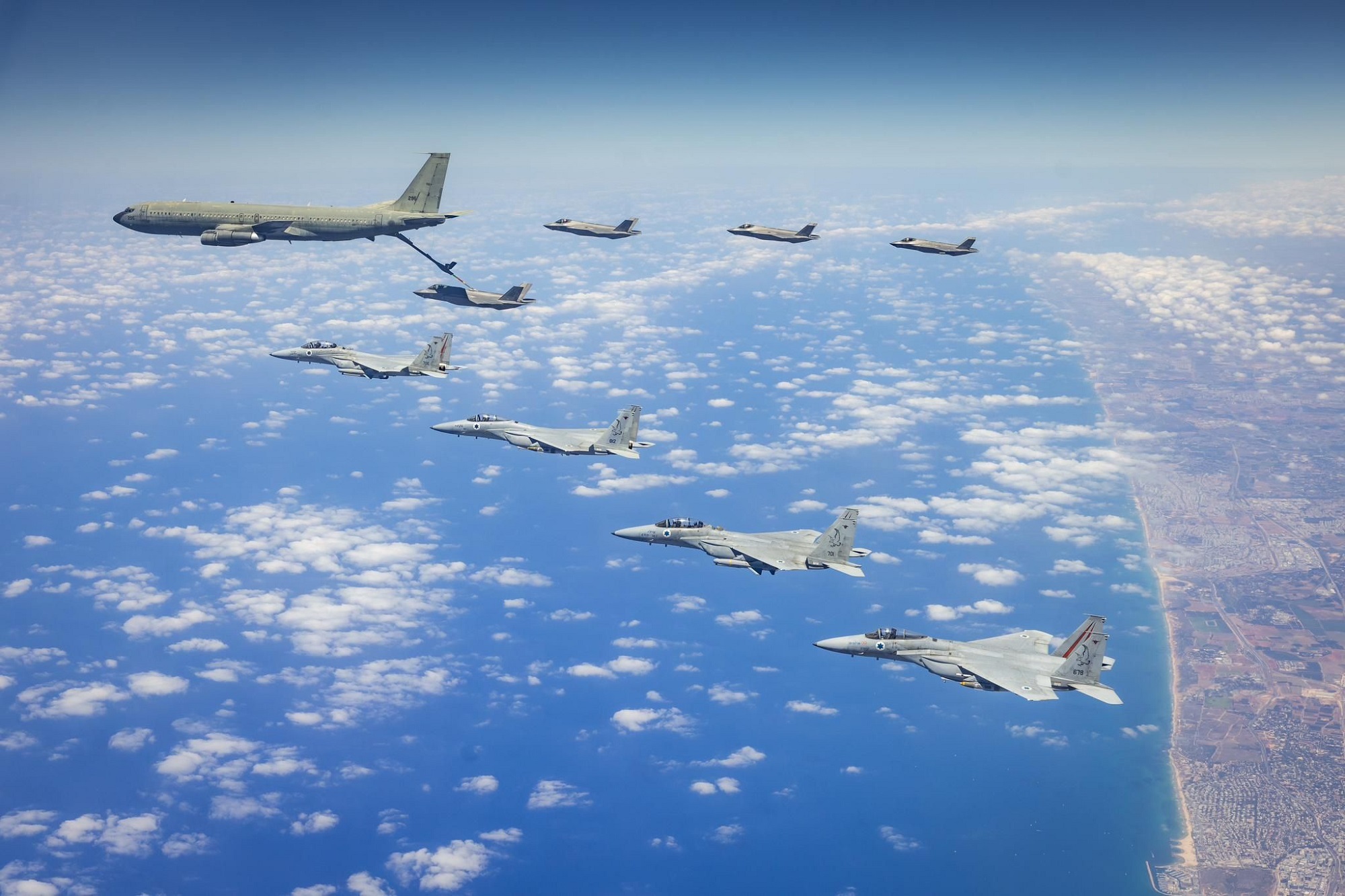
Alongside operational achievements, the Air Force’s modernization effort continues at full speed.
This year, Israel received its first KC-46A “Gideon” aerial refueling aircraft, one of the most important strategic assets acquired for the Air Force in decades. Its significance is difficult to overstate.
Fighter aircraft may be the spearhead, but tanker aircraft are what enable them to reach the most distant targets and remain airborne for extended periods. Anyone who followed the operations against Iran understands just how important the “Gideon” fleet will become in the years ahead.
At the same time, the expansion of the F-35I “Adir” fleet continues.
The three most recent aircraft delivered to Israel further increased the size of what is already considered one of the world’s most operationally experienced stealth fighter fleets. Meanwhile, plans continue to move forward for the procurement of an additional F-35 squadron, ensuring that the Air Force remains at the forefront of aerial technology well into the next decade.
Alongside the stealth fleet, Israel is also advancing the acquisition of the F-15IA, the most advanced version of the legendary “Ra’am.”
If the “Adir” is the surgeon’s scalpel, then the “Ra’am” is the strategic hammer. Its enormous payload capacity, range, power, and operational flexibility guarantee that even in the age of stealth aircraft, the heavy fighter will continue to play a central role in virtually every future operational scenario.
Against the backdrop of these successes, it is important to remember that significant challenges remain.
While the Air Force has achieved near-total superiority against enemy aircraft and surface-to-air missile systems, there is one area in which it is still searching for a complete solution: the threat posed by inexpensive drones and loitering unmanned aerial systems.
Recent wars have highlighted what is already becoming clear to military around the world. A fighter aircraft worth tens of millions of dollars and an advanced air-defense system are not necessarily the most efficient answer to a drone costing only a few hundred dollars.
Israel has developed a variety of solutions, ranging from advanced detection systems to laser-based interception technologies, but the struggle is far from over. This may well become the most important operational challenge facing the Air Force during the coming decade.
And yet, when one looks back on the past year, it is difficult not to be impressed by the scale of the transformation.
The Israeli Air Force of 2026 is not merely the force that was born in May 1948.
Nor is it simply the force that achieved victory during Operation Focus in 1967, the one that destroyed Iraq’s nuclear reactor in 1981, or the one that eliminated Syria’s nuclear reactor in 2007.
It is a different Air Force altogether.
A modern, multidimensional, digital, stealth-enabled force built around information networks. A force capable of operating simultaneously over Gaza, Lebanon, Syria, Iraq, and Iran. A force that seamlessly integrates manned and unmanned platforms and conducts missions that would once have been considered science fiction.
Less than three years ago, many questioned whether it could restore its public standing.
Today, it appears that it has done far more than that.
It has redefined the boundaries of what is possible.
The 78th Air Force Day is therefore not merely a celebration of a distinguished past. It is also a reminder that even after seventy-eight years, the Israeli Air Force continues to evolve, innovate, and surprise.
In a Middle East that grows more dangerous and complex with every passing year, that may be its most important capability of all.