

The Israeli Pilots Association magazine

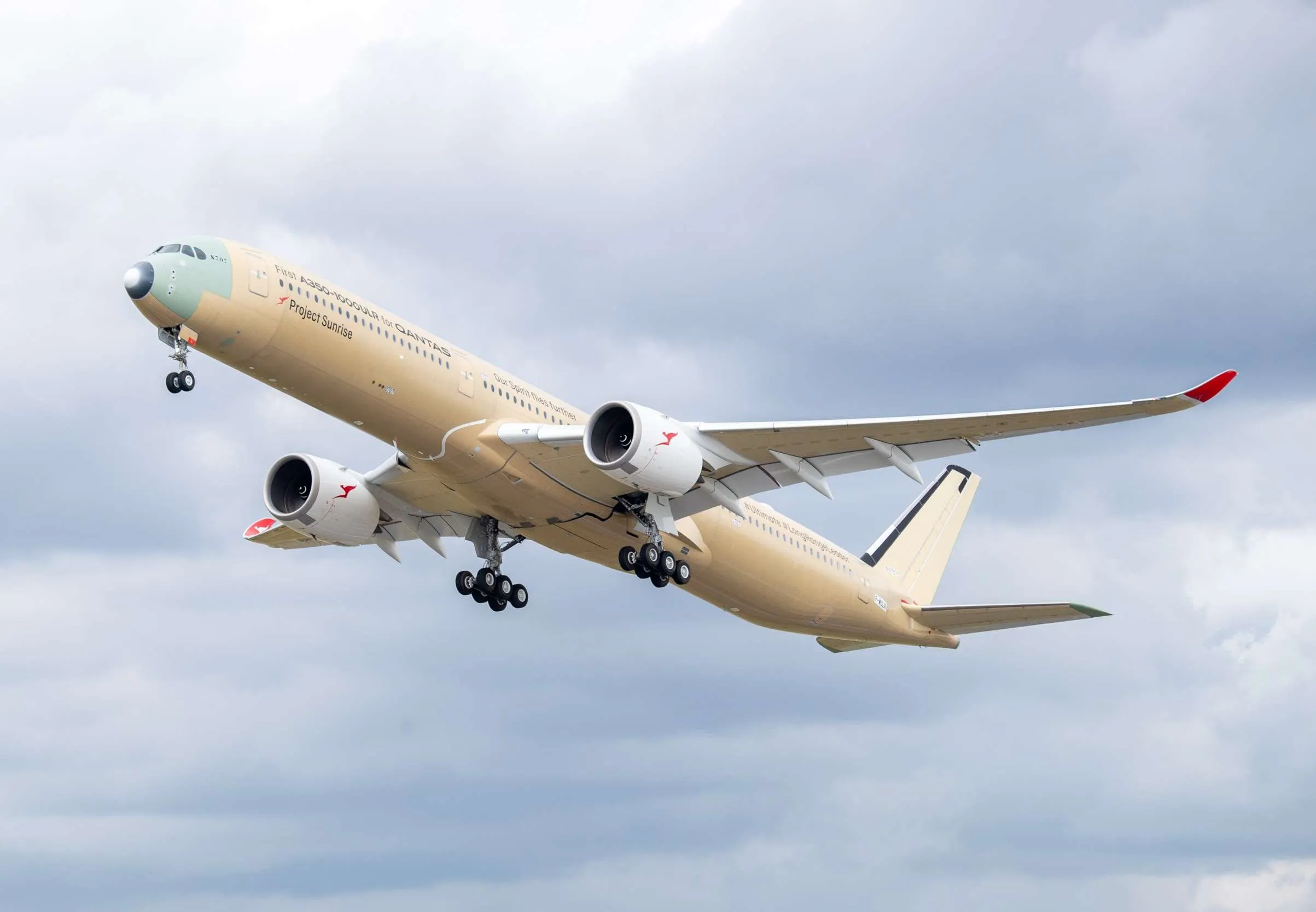
The Airbus A350-1000ULR has broken the official world record for the longest nonstop flight by a commercial passenger aircraft, covering an extraordinary 23,075 kilometers without landing. The previous record was set in 2005 by a Boeing 777-200LR, which flew 21,601 kilometers. The A350 flight lasted exactly 24 hours and 24 minutes.
The aircraft departed Melbourne and headed east across the Pacific Ocean, crossed the United States and then the Atlantic before landing at Airbus’ facilities in Toulouse. Over the course of the flight, the aircraft crossed three continents and two oceans.
The flight attracted enormous public interest. More than 3.6 million people tracked it in real time on Flightradar24, making it the second-most-followed flight in the platform’s history.
The ULR – Ultra Long Range – variant incorporates specific structural modifications, most notably an additional 20,000-liter rear center fuel tank. The flight demonstrated the ability of these systems to operate as intended under maximum takeoff-weight conditions and during prolonged fuel-management operations.
Flights lasting more than 20 hours require particular attention to the physiological and operational needs of both crew and passengers. Accordingly, the flight was also used to evaluate the aircraft’s environmental-control systems and its new Twin Flight Crew Rest Compartment, designed to enable pilots to rotate through duty and rest periods efficiently on ultra-long-duration flights without disturbing one another.
Aviation safety authorities, including the US Federal Aviation Administration (FAA) and the European Union Aviation Safety Agency (EASA), impose stringent requirements designed to mitigate the risks associated with extreme crew fatigue.
The services will be operated by four pilots, two captains and two first officers, who will rotate through duty periods during the flight. Airbus has developed a dedicated flight-crew rest compartment located directly above the cockpit. It includes two full-length bunks, a padded seat and entertainment screens. Access to the compartment is controlled to ensure a quiet and isolated rest environment.
Cabin crew will also have dedicated rest facilities. At the rear of the aircraft, in the upper fuselage above the passenger cabin ceiling, is a cabin-crew rest area containing six individual bunks with blackout curtains, independent climate control and a continuous intercom connection to the passenger cabin for use in an emergency.
The flight forms part of the aircraft’s formal certification process with EASA. Deliveries of the first aircraft to Qantas are expected to begin in April 2027, enabling the airline to launch nonstop commercial services of approximately 19 to 22 hours from Sydney and Melbourne to London and New York.
In doing so, Qantas intends to overcome what Australians have long called the “tyranny of distance”—the need for intermediate stops that can add approximately three to four hours to the overall journey.
How Much Will It Cost?
Qantas is investing billions of dollars in Project Sunrise and intends to charge a significant premium for the nonstop services, reflecting the substantial time savings they offer.
The airline has ordered 12 dedicated A350-1000ULR aircraft. At list-price values, before substantial volume discounts normally negotiated between manufacturers and major airline customers, aircraft of this type are valued at hundreds of millions of dollars each, placing the notional value of the transaction at more than $4 billion.
Qantas has invested tens of millions of dollars more in medical research conducted in cooperation with the University of Sydney, examining the effects of jet lag, as well as in redesigning the aircraft interior and funding ultra-long-range test flights.
Qantas has indicated that it expects to charge a premium of approximately 20 to 30 percent for these nonstop services compared with connecting itineraries via hubs such as Singapore or Perth. Even so, industry estimates for one-way fares on a nonstop Sydney–London service are broadly within the range expected for premium long-haul travel:
First Class: from more than $14,000, for private luxury suites.
Business Class: approximately $10,000, for enclosed suites with individual doors.
Premium Economy: approximately $4,000, with enhanced seat pitch and additional legroom.
Economy Class: from approximately $1,600.
Special Meals and a Wellbeing Zone
Passengers, too, will receive special treatment.
First and foremost, the aircraft will offer substantially more space per passenger across all cabins. Whereas a conventional A350-1000 typically accommodates between 350 and 410 passengers, the ULR configuration will have only 238 seats – less than 60 percent of the type’s typical capacity, in order to reduce weight and significantly improve passenger comfort.
To mitigate the effects of remaining inside an aircraft for close to an entire day, Qantas has introduced a distinctive concept: the Wellbeing Zone.
Located in the center of the aircraft between the Premium Economy and Economy cabins, this dedicated area will allow passengers to stretch, loosen stiff muscles and stimulate circulation. It will be open to passengers in all classes and will feature integrated handholds for stretching exercises, screens displaying guided movement and exercise routines designed to promote blood circulation, self-service hydration stations and specially selected snacks.
The aircraft will also feature an intelligent LED lighting system designed to simulate, gradually, the light-and-dark cycle at the destination. The objective is to help reset passengers’ circadian rhythms and minimize the effects of jet lag.
To justify a First-Class fare exceeding $14,000, Qantas has completely redesigned its premium passenger experience.
The aircraft will feature only six First Class suites in a 1-1-1 configuration. They have been described as “mini apartments” in the sky. Unlike many conventional First-Class products, where the seat itself converts into a bed, each Qantas suite will feature both a wide reclining armchair and a separate, permanently available two-meter fully flat bed. Passengers will therefore not need to wait for the crew to convert their seats into a sleeping surface.
Each suite will be fully enclosed by high sliding doors, providing a high degree of privacy. It will also include a large 32-inch 4K touchscreen, a private wardrobe, personal storage drawers and wireless charging facilities for mobile devices.
The human body functions differently at 40,000 feet, particularly when passengers remain airborne for nearly an entire day. Medical research conducted by Qantas has indicated that both the type of food consumed and the timing of meals can have a significant influence on passengers’ circadian rhythms.
Qantas has therefore developed a science-based menu specifically for its ultra-long-haul passengers. The airline is working with renowned Australian chef Neil Perry and researchers from the University of Sydney to create meals intended to reduce the burden on the digestive system while promoting either sleep or alertness according to the stage of the journey and destination time.
Meals intended to encourage sleep will include ingredients rich in tryptophan, such as chicken, dairy products and fish. The menu will also make greater use of natural ingredients and spices such as ginger, intended to help reduce nausea and support circulation, while salt levels will be reduced to mitigate dehydration and bloating.
Immediately after departure, passengers will receive a light meal timed according to the corresponding hour at their destination rather than their point of origin. The intention is to encourage the body and brain to begin synchronizing with the destination time zone as early as possible.
Entering Service Next Year
Under the current schedule, deliveries of the first fully outfitted commercial aircraft to Qantas will begin in April 2027.
The first official Project Sunrise route, between Sydney and London Heathrow, is scheduled to launch toward the end of 2027. The nonstop flight is expected to take approximately 22 hours.
The Sydney-New York JFK service is expected to follow shortly afterward, with a flight time of approximately 21 hours.
The next phase is scheduled to begin in 2028, following delivery of the remaining aircraft in Qantas’ 12-aircraft order. The airline intends to introduce nonstop services from Melbourne to London and New York, while also evaluating direct routes to continental European destinations such as Paris and Frankfurt.
At present, Qantas is the only airline to have ordered the specific A350-1000ULR sub-variant equipped with the increased fuel capacity required for Project Sunrise. There is, however, broader international interest in the aircraft and potentially a substantial market for the concept.
Airlines such as Turkish Airlines and major Gulf carriers, including Emirates and Qatar Airways, are examining ultra-long-range aircraft capabilities for potential nonstop services to particularly distant destinations in South America and Oceania.
Singapore Airlines, meanwhile, already operates the smaller A350-900ULR successfully on its nonstop Singapore–New York services.
The commercial success of Qantas’ Project Sunrise operation could therefore become an important test case for the industry and potentially generate additional orders for the larger A350-1000ULR from other global airlines.