

The Israeli Pilots Association magazine
The current issue of the Pilots Association Journal focuses on the prolonged period of war that began on the terrible day of October 7, 2023, and has yet to come to an end. Since my primary professional focus in recent years has been flight safety, alongside my work as a simulator examiner, I chose to write about the subject of flight safety during wartime.

This article is dedicated to two aircrew members who lost their lives in the crash of an ultralight aircraft on May 24, 2026, near Tel Adashim in northern Israel: retired Captain and Lieutenant Colonel (Res.) Itay Talmi and First Officer Lieutenant Colonel (Res.) Yuval Inbar.
I knew the late Itay Talmi for more than forty years. Although he was several years older than me, we first met in the Israeli Air Force when we both flew the Kfir fighter aircraft. We later met again in El Al’s Boeing 747-200 fleet, where we shared several memorable flights together. Following his retirement, he devoted much of his time to agricultural aviation, general aviation, and aerial firefighting. He was an aviator in the fullest sense of the word – a people person, kind, highly professional, youthful in spirit, and always smiling.
I came to know the late Yuval Inbar when he served as a First Officer in the Boeing 737 fleet. I examined him during one recurrent check and later instructed him in the simulator as part of the RTC (“Route to Advancement”) program. That was enough to recognize a serious professional with extensive aviation experience and exceptional capabilities. Most of what I learned about his distinguished Air Force career came only after his passing. Until recently, he continued to fly as a reservist in one of the most advanced fighter squadrons in the Israeli Air Force – and indeed in the world-carrying out long-range and other operational missions.
May the memories of Itay and Yuval be a blessing.
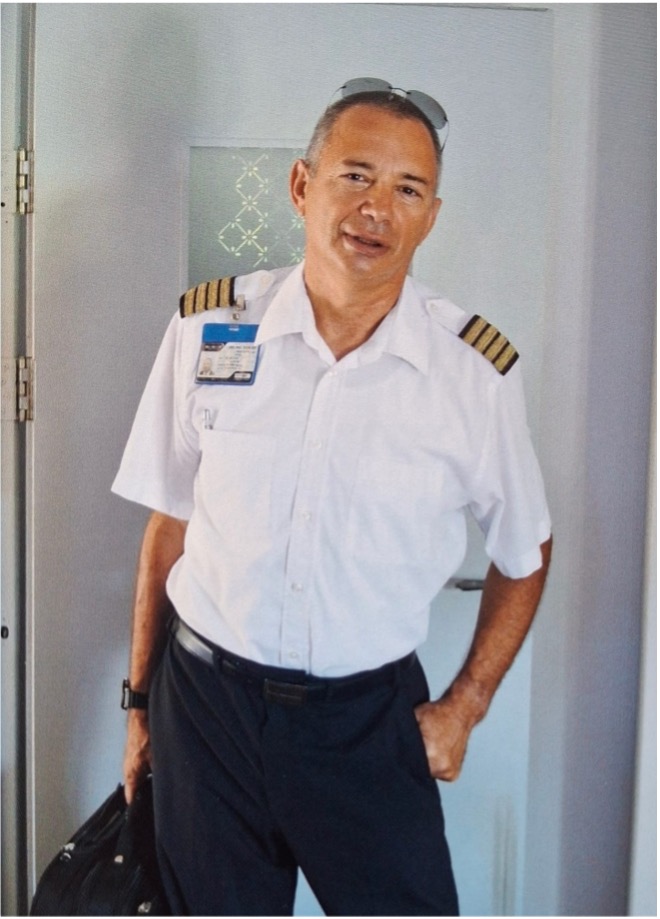
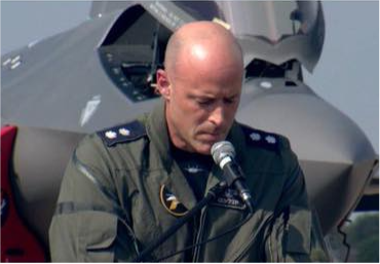
The subject of this article is flight safety during wartime. Returning to the tragic introduction, Lieutenant Colonel (Res.) Yuval Inbar continued flying in a fighter squadron until his final days, conducting complex operational missions deep inside hostile territory over many years. The circumstances of the ultralight crash are currently under investigation by Israel’s Aviation Safety Investigation Authority. We all hope that the causes of the accident will be identified, lessons learned and perhaps used to prevent the next tragedy.
Could there be a connection between being an active operational fighter pilot and later becoming involved in an accident while flying a light aircraft? To be clear, this is an open question, and I am not suggesting any particular conclusion.
When I began researching this article, I found that most available sources focus primarily on aviation security rather than aviation safety, despite often using the same terminology. Does the distinction really matter? The purpose of safety is to prevent accidents, particularly fatal accidents that result in injuries, loss of life, and property damage. Does it truly matter whether an aircraft crashes because of a missile strike, a technical malfunction, or human error? Aviation security seeks to prevent death, injury, and destruction as well. A fatal airliner accident can become a national disaster no less severe than the loss of an aircraft due to hostile action.
An Island Nation
Civil aviation is one of the cornerstones of the modern world. Every day, thousands of commercial aircraft transport millions of passengers across continents, connecting economies, cultures, and governments. The global aviation system is built on stability, coordination, and safety. War undermines all three.
Armed conflicts create some of the most dangerous operating environments for civil aviation, exposing aircraft, airports, flight crews, and passengers to unpredictable and rapidly evolving threats. Air routes frequently pass near politically unstable regions. Consequently, the safety of civil aviation during war and conflict has become a major international concern involving governments, military organizations, intelligence agencies, regulators, and airlines.
The challenge extends far beyond avoiding active battlefields, because conflict zones are not always clearly defined or geographically contained. Taking Israel’s ongoing conflict as an example, its boundaries stretch from Iran in the east to Yemen in the south and may extend into entirely unexpected regions.
Modern warfare includes long-range missiles, drones, cyber warfare, satellite interference, and advanced air defense systems capable of threatening aircraft hundreds of kilometers away from the actual fighting. At the same time, the global economy depends heavily on air connectivity, making the complete closure of airspace an economically and politically difficult decision.
For Israel specifically, commercial aviation serves as a vital lifeline and an immediate connection to the free world. Unlike many other conflict zones, a prolonged shutdown of commercial air traffic constitutes a severe strategic threat in itself. Consequently, there are circumstances in which commercial aviation must continue operating simultaneously with ongoing armed conflict.
A civilian aircraft can become a casualty of war even when neither its state of registry nor its operating airline has any connection whatsoever to the conflict responsible for the incident.
Three examples illustrate this reality.
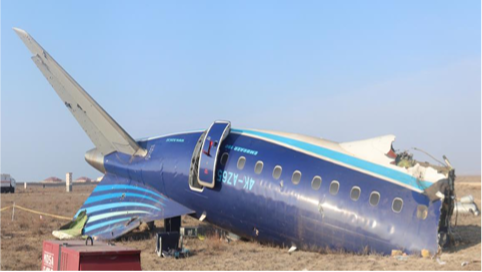
On December 25, 2024, an Embraer E190 operated by Azerbaijan Airlines was shot down by surface-to-air missiles fired by a Russian air-defense battery. The aircraft, flying from Baku to Grozny, was mistakenly identified as a threat. The crew displayed extraordinary professionalism, managing to keep the damaged aircraft airborne and direct it toward Aktau Airport. The aircraft ultimately crashed while attempting to land. Thirty-eight of the sixty-seven passengers and crew members were killed.
The trigger-happy response of the Russian air-defense operators stemmed from Russia’s ongoing war with Ukraine. The front lines were approximately 500 kilometers northwest of Grozny, but fears of a Ukrainian drone attack led to the tragic mistake. Even the earliest photographs from the crash site clearly revealed shrapnel damage caused by missile fragments.

On July 17, 2014, Malaysia Airlines Flight MH17, a Boeing 777-200ER, was shot down by a surface-to-air missile launched by pro-Russian separatists while flying over eastern Ukraine en route from Amsterdam to Kuala Lumpur. All 298 passengers and crew were killed.
Needless to say, Malaysia had no connection whatsoever to the conflict. The aircraft was simply passing through the region because, at that time, the airline did not consider the route unsafe. Incidentally, El Al had altered its flight paths in the area long before the shootdown occurred.
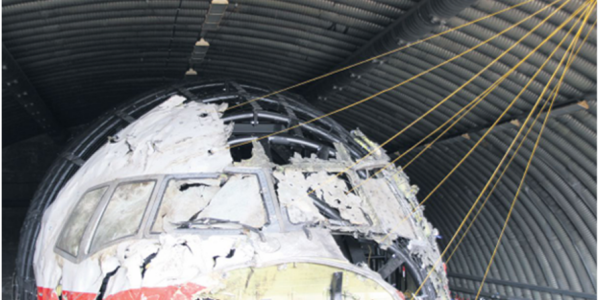
The accident was investigated by the Dutch Safety Board because the flight originated in Amsterdam. As part of the investigation, large portions of the aircraft were reconstructed inside a hangar at a Dutch military air base. The wreckage clearly displayed the missile impact pattern and shrapnel penetration marks.
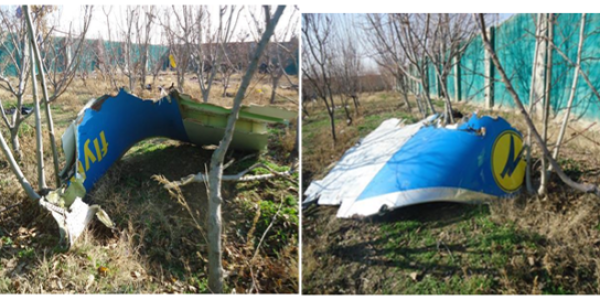
On January 8, 2020, a Ukraine International Airlines Boeing 737-800 departed Tehran for Kyiv. Shortly after takeoff, it was mistakenly identified as a threat by an Iranian surface-to-air missile battery. The heightened alert status stemmed from Iranian missile strikes against U.S. military bases several days earlier and fears of an American response.
The result was the destruction of a civilian airliner and the loss of all 176 people on board.
Up to this point, we have focused on risks arising directly from armed conflict. I would now like to address the broader range of safety hazards created by war. Many of these risks overlap the domains of both safety and security.
GPS Jamming and Spoofing
I devoted an entire article to this subject in Issue No. 9 of this journal.
GPS-used here as a generic term encompassing the American system as well as Russian, European, and Chinese satellite navigation constellations-has become deeply embedded in modern life. Modern aviation increasingly relies on aircraft-based navigation systems and less on ground-based navigation aids.
Accurate navigation is essential for route management, separation standards, and air traffic control. Many airports now depend on satellite-based navigation for arrivals and departures, while precision approaches increasingly utilize GPS-based technologies.
Because numerous modern weapons depend on GPS signals for accuracy, states and organizations seek to disrupt these signals through jamming or spoofing.
GPS signals are inherently weak and relatively easy to block. This process, known as jamming, reduces navigational accuracy and can interfere with systems that rely on precise position reporting. Air traffic control systems increasingly depend on accurate aircraft position data, and degraded navigation performance can reduce surveillance effectiveness and increase collision risk.
Spoofing is even more insidious. It involves transmitting false signals that cause navigation systems to calculate an incorrect position. Many of us have unknowingly “visited” Beirut or Amman while driving in Israel because our navigation devices were deceived by spoofed signals. While the goal may be to mislead GPS-guided weapons, civilian aircraft are often left relying on systems that confidently present inaccurate information.
Such disruptions can affect critical safety systems, including the Enhanced Ground Proximity Warning System (EGPWS), whose terrain look-ahead functionality depends on accurate aircraft positioning. An incorrect position may prevent a genuine terrain threat from being detected in time. Conversely, it may generate false alerts, potentially triggering unnecessary avoidance maneuvers in congested airspace or leading crews to gradually normalize the disregard of warnings.
Airspace and Route Disruptions
Israel exists under a constant threat of rockets, ballistic missiles, and other indirect-fire weapons. To enable the effective operation of air-defense systems such as Iron Dome, arrival and departure routes-particularly around Ben Gurion Airport-must frequently be adjusted.
Commercial aviation strives to provide flight crews with options at all times, such as the ability to deviate around hazardous weather. Early in the war, when the primary threat originated from Gaza, arrival and departure routes were shifted northward. These revised procedures created a form of coexistence between military fighter formations and commercial air traffic.
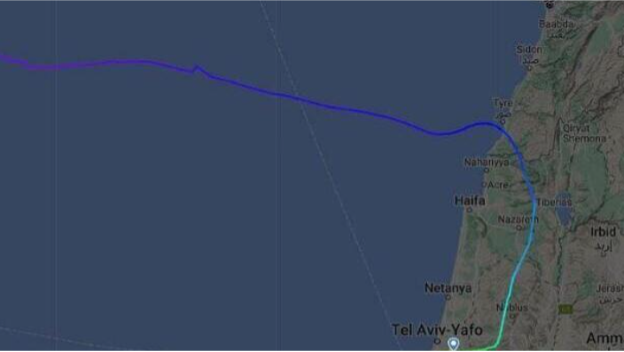
In one case, an El Al aircraft operating on the northern route encountered active weather. To avoid entering dangerous convective clouds, the crew deviated north of the published route and inadvertently penetrated deep into Lebanese airspace near the city of Tyre. What began as an effort to avoid a safety hazard risked becoming a serious security incident.
The Human Factor
In April 2026, the International Federation of Air Line Pilots’ Associations (IFALPA) published a position paper examining the human performance implications of commercial aviation operations in conflict zones.
The document does not specifically address the unique realities faced by Israeli civil aviation, but its conclusions are highly relevant.
The paper emphasizes flight fitness, captain’s authority, degraded human performance, mental health support, and fatigue management.
The traditional standards governing fitness to fly remain fully applicable during wartime. Every crew member remains responsible for monitoring their physical and psychological condition and declaring themselves unfit if necessary. Mental fatigue, stress, and psychological strain can all compromise flight fitness.
Airlines must recognize such circumstances, accept declarations of unfitness without punitive consequences, and foster a positive safety culture. Yet staffing shortages may create subtle pressures on pilots to continue flying even when they do not feel fully capable.
The paper also urges airlines to respect the captain’s authority to refuse operations in conflict zones or request route changes when safety or security concerns arise.
Operating in conflict areas can degrade human performance through heightened vigilance, cognitive overload, mental fatigue, reduced trust in navigation systems affected by GNSS interference, and operational uncertainty. These factors increase workload, impair decision-making, reduce situational awareness, and weaken crew coordination.
Avoiding conflict zones remains the preferred option. When that is impossible, comprehensive threat and error management becomes essential. Even then, some degradation of human performance is nearly unavoidable.
What About Israel?
Commercial air transportation to and from Israel will always depend heavily on Israeli airlines. The workforce of these airlines includes large numbers of military reservists, not only among pilots but across many operational disciplines.
Most airline maintenance technicians began their careers in the Air Force, and many continue to serve in reserve units. Others serve in armored corps units, infantry brigades, intelligence organizations, and numerous additional military roles.
During prolonged wars, these employees are called up for reserve duty. Their absence increases the workload borne by those who remain, potentially eroding safety margins and contributing to fatigue and stress.
Flight Time Limitations (FTL) exist specifically to manage workload and fatigue risks. During the war, staffing shortages prompted the Civil Aviation Authority to relax some limitations in order to sustain flight operations.
Flying is a profession that demands significant cognitive and mental resources. Since October 7, 2023, the experiences of war have imposed extraordinary psychological burdens on many aviation professionals.
Crew members have been exposed to traumatic events, lost friends and relatives, worried about family members serving in combat, launched flights under missile threats, and left loved ones at home under similar threats. Cabin crew, maintenance personnel, and passengers alike have faced unprecedented emotional stress.
Reservists returning from extended military service may experience additional challenges. Their wartime experiences can influence how they perceive risks when returning to commercial operations. Some may experience mental fatigue. Others may subconsciously feel that nothing in civilian aviation can compare to what they have already endured.
Military aviation is fundamentally mission oriented. Mission accomplishment takes precedence, and risk acceptance levels are often significantly higher, even when human lives are at stake. Commercial aviation is fundamentally different. The mission is to land safely. Reaching the destination is secondary. Safety comes first.
Can individuals returning from demanding military service immediately re-establish that distinction? It is an important question.
Under normal circumstances, Israeli reserve pilots routinely alternate between military flying and airline operations. Flying an F-35 one day and an airliner to Rome the next is not unusual. Israel is unique in this respect. Few airlines anywhere in the world employ such a large proportion of professionals simultaneously serving as military reservists.
When reserve service becomes prolonged, the challenges increase.

Training and qualification present another concern. El Al was fortunate that its simulator center at Shoham became operational when it did. Without it, many crews would have lost currency. Yet simulator sessions frequently had to be interrupted by missile alerts requiring crews to seek shelter.
Can truly effective training occur under such conditions? We do the best we can with the circumstances available, but long-term consequences cannot be ruled out.
Young pilots entering the profession face additional challenges. What happens when a newly qualified pilot immediately departs for extended reserve duty? What happens when pilots accumulating experience toward command upgrades have their progression repeatedly interrupted?
The consequences may not be visible immediately. They may emerge years later in the form of safety events.
Flight planning itself becomes more complex. Operations into threatened areas require additional fuel, alternate airports outside the threat zone, and contingency planning for airspace closures. Aircraft may be forced into prolonged holding patterns during attacks with no clear indication of when the situation will stabilize.
Even a missed approach becomes more complicated when missile attacks occurring near the destination airport. Departing from a threatened area similarly adds both mental workload and operational complexity.
Finally, civilian aircraft increasingly share airspace with military operations governed by different procedures and priorities. Anyone who has recently visited Ben Gurion Airport has undoubtedly noticed the large number of U.S. Air Force tanker aircraft that have effectively taken over portions of the airport.
The situation facing Israel and its commercial aviation sector is unprecedented. There is no established handbook. The learning process continues in real time.
Conclusion
Maintaining a high level of safety in commercial aviation is a demanding challenge even under normal circumstances. Armed conflict-particularly prolonged conflict-introduces additional threats and complexities that must be actively managed to maintain an acceptable level of safety and security (ALOS).
Achieving this requires a sustained and collaborative effort among the regulator, the airlines, and aviation professionals themselves.
As the biblical injunction reminds us:
“Take utmost care and watch yourselves closely.” (Deuteronomy 4:15)