
The Israeli Pilots Association magazine

The Farnborough International Airshow, one of the world’s most important aerospace events, was held in the United Kingdom last week with record figures underscoring both the industry’s recovery and growing demand for aviation, space and defense technologies.
This year’s exhibition featured 1,636 exhibitors, an increase of 15 percent over the previous edition in 2024, with 22 percent participating for the first time. No fewer than 63 percent of exhibitors came from outside the United Kingdom, making Farnborough the most international airshow on the global calendar.
The number of national pavilions also rose to 28, compared with just 21 two years ago. To accommodate the expansion, approximately 5,000 square meters of new exhibition space were added this year, including an additional exhibition hall and new outdoor hospitality areas.
The show closed with a record $84.7 billion in deals signed over four days.
In the contest for commercial orders, Boeing had a particularly successful Farnborough 2026, overtaking Airbus with 186 firm orders compared with 157 for its European rival. Boeing’s performance was driven largely by major deals with Riyadh Air and leasing companies such as SMBC.
Israel’s aerospace and defense industry also established a highly visible presence this year, despite the political and security challenges of the period.
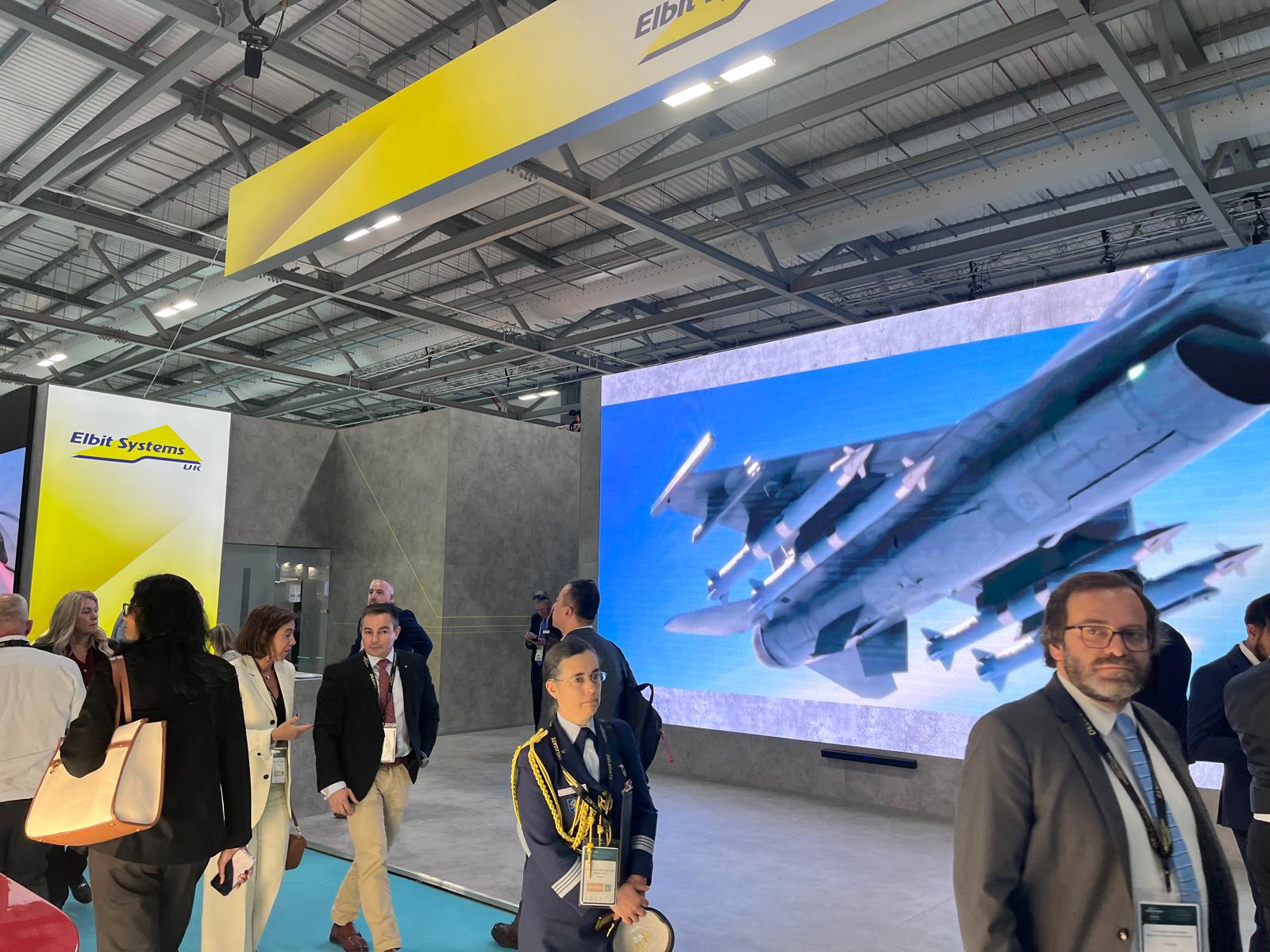
Leading companies including Israel Aerospace Industries, Elbit Systems, Rafael and others displayed a broad range of advanced systems in unmanned aviation, air defense, precision weapons, electronics, space and AI-based solutions.
For the Israeli companies, Farnborough represents a strategic opportunity to expand international cooperation, advance new transactions and present customers from around the world with operational and technological capabilities that have been proven in combat in recent years.
Their participation underlines Israel’s status as one of the world’s leading technological powers in aerospace and defense, as well as continued global demand for Israeli-developed systems.
One of the world’s most important stealth fighters, Lockheed Martin’s F-35A – the aircraft known in Israel as the Adir – provided one of the show’s most impressive flying displays. The F-35, which carried a significant share of the operational burden in Israel’s recent war – or wars – with Iran, shook the exhibition halls as it demonstrated its aerodynamic performance and thrust-control capabilities.
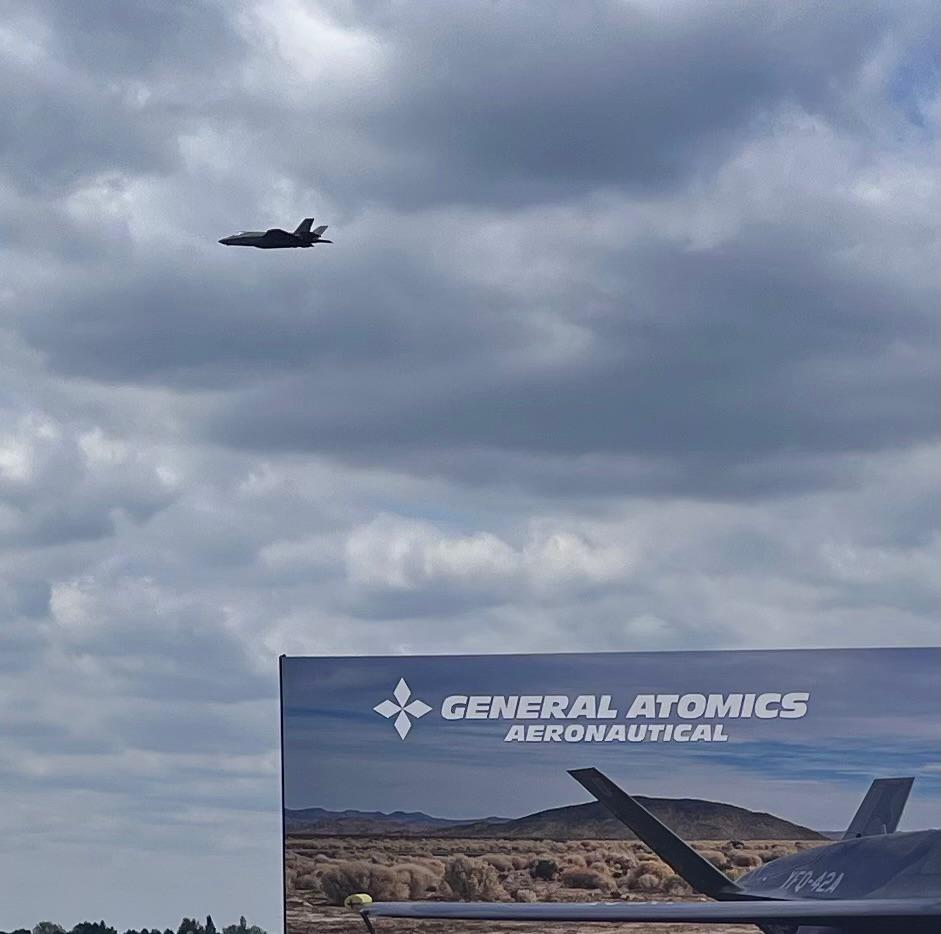

Beyond the flying display itself, the F-35 stood at the center of many of the defense discussions at Farnborough, particularly regarding its future integration into distributed combat networks operating autonomous unmanned aircraft under Loyal Wingman concepts.
One of the stars of the show was undoubtedly the Airbus A350, whose ultra-long-range derivative, the A350-1000ULR, has since completed a historic record-breaking flight.
The aircraft departed Melbourne, Australia, and landed in Toulouse, France, home to Airbus’ main production facilities, after flying no fewer than 23,075 kilometers nonstop—a new world record for a commercial passenger aircraft.
The flight, which lasted slightly more than 24 hours, was conducted as part of Qantas’ Project Sunrise, the Australian airline’s program to connect Australia nonstop with Europe and the United States.
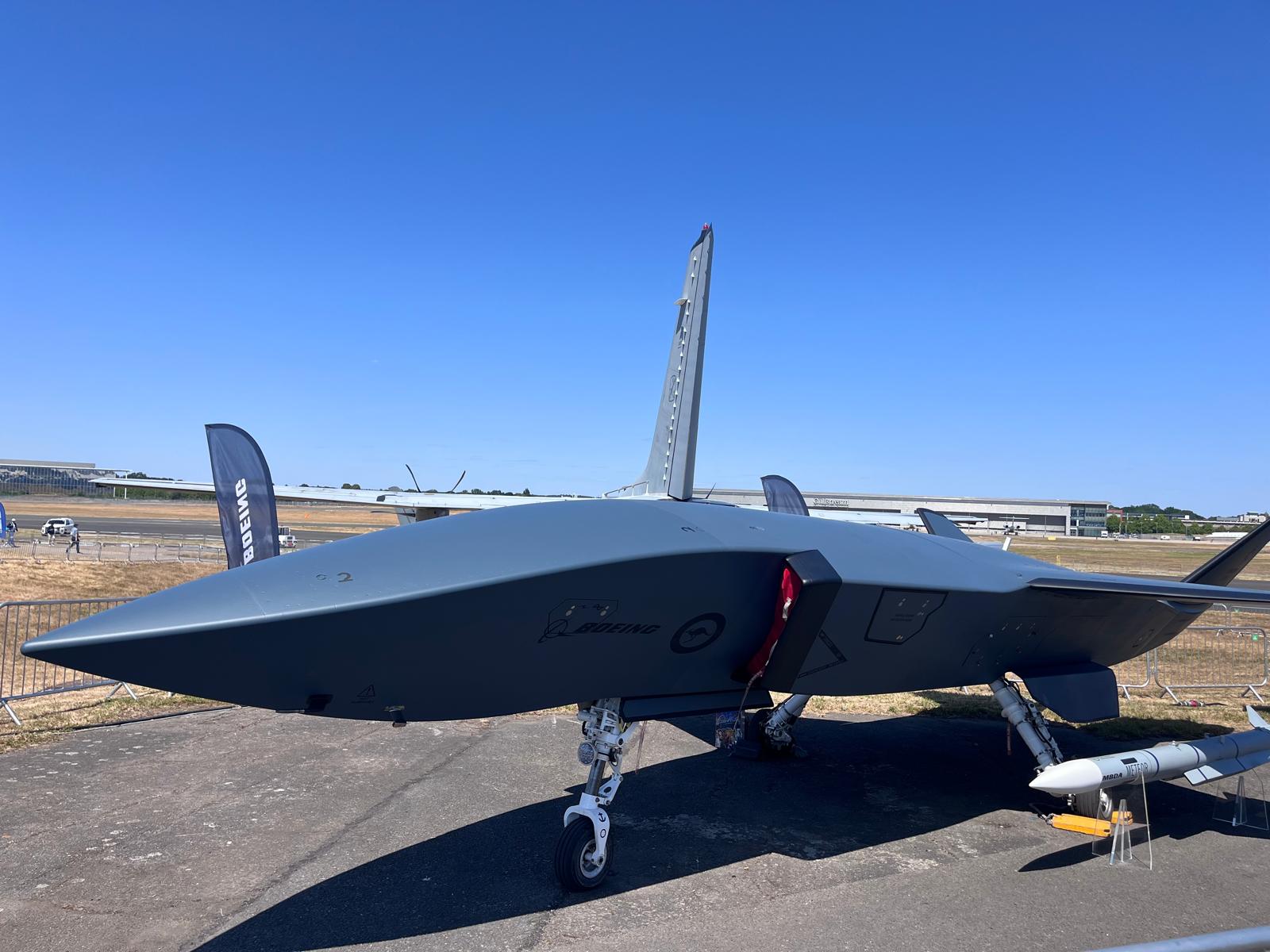
At Boeing’s static display, one of the most prominent aircraft was the advanced autonomous MQ-28 Ghost Bat, originally developed by Boeing Australia for the Royal Australian Air Force.
Designed around the Loyal Wingman concept, the UAV is intended to operate alongside crewed combat aircraft, providing protection, intelligence and tactical support. It incorporates advanced artificial intelligence.
In commercial aviation and logistics, Boeing displayed a 777 freighter conversion in cooperation with global logistics giant DHL. In the flying display, Boeing also presented an extended-range variant of the 737 MAX.
Several aircraft made their Farnborough debut this year.
Bombardier Global 8000: described as the fastest and most advanced business jet since the Concorde era, the aircraft made its world flying-display debut at Farnborough, demonstrating impressive performance and long-range capability.
Vertical Aerospace VA-1X eVTOL: a historic debut. For the first time in Farnborough Airshow history, an electric vertical-takeoff-and-landing aircraft conducted a public flight demonstration. The event marked a significant step in the evolution of Advanced Air Mobility from theoretical concept toward operational reality.
Saab 340B “Gertrude” (GE Aerospace): a unique test aircraft that flew with its right-hand engine replaced by a hybrid-electric propulsion system developed in cooperation with Boeing and Beta Technologies. The aircraft demonstrated the integration of electric power with conventional turbine propulsion in live flight.
Beta ALIA CX300: another electric aircraft, this time in a conventional takeoff-and-landing configuration, which conducted exceptionally quiet demonstration flights and showcased the growing maturity of electric aviation technology.
Hongdu L-15, operated by Fursan Al Emarat: the Chinese light attack and advanced trainer aircraft made its European debut, flown by the United Arab Emirates Air Force aerobatic team, Fursan Al Emarat.
It was the first time a Chinese-designed aircraft had performed a flying display over the United Kingdom, and the aircraft became one of the more closely watched attractions of the show, drawing considerable attention from the defense community.
One of the most notable trends at Farnborough this year was the shift away from physical exhibits—products and systems visitors can actually touch—and toward increasingly sophisticated digital presentations on large screens.
The rapid increase in digital performance and capability, combined with the expanding use of artificial intelligence, now enables companies to create highly immersive product demonstrations at a fraction of the cost of traditional physical displays.
For dedicated aviation enthusiasts, the flying display may therefore have been somewhat less exciting than in years past, with fewer aircraft thundering overhead and shaking the exhibition halls.
In the digital domain, however, the industry has advanced to the point where companies are seriously discussing the possibility of eliminating physical prototypes altogether and proceeding directly from a virtual model to serial production.
Two software giants that embodied this trend particularly well were France’s Dassault Systèmes and Germany’s Siemens.
Both companies also maintain significant and active operations in Israel.
The writer was a guest of Arkia Company