

The Israeli Pilots Association magazine
The most dramatic and profound turning point in the history of aviation occurred during the September 11, 2001 attacks * The terrorist assault, which claimed the lives of 2,977 people, completely shattered old working assumptions * The aircraft itself was transformed from a platform for negotiation into a weapon of mass destruction, and the protocol of complying with hijackers collapsed once and for all * A brief history of inflight security

A well-known story from the late 1960s—a period ironically dubbed the "Golden Age of Hijacking" because dozens of commercial aircraft, primarily from the United States, were hijacked and diverted to Cuba by radical left-wing activists seeking political asylum or simply supporters of Fidel Castro—tells of a man who burst into the cockpit of an American Airlines plane. Pointing a gun at the pilot, he demanded, "Take me to Miami!" The stunned pilot said, "But we are flying there! Miami is our destination!" The hijacker replied, "Yes, but on my last three flights to Miami, I was hijacked to Cuba. This time, I want to make sure we actually get to Miami."
Since then, the security concept at airports and on passenger aircraft has undergone a complete transformation. The modern array known today—which includes biometric screening, advanced technological scanning, and cross-referencing intelligence data—was not born out of long-term planning, but rather as a chain of direct responses to shifting threats, exposed security loopholes, and terrorist attacks that reshaped the rules of the aviation game.
We have turned our attention to this subject, of course, due to the recent terrorist incident on Flydubai Flight 1073, which took off yesterday from Dubai to Tel Aviv, where an attempted hijacking and suicide attack by the aircraft's co-pilot was thwarted. In an extraordinary and noteworthy manner, the intervention of the passengers, who overpowered the hijacker, prevented a horrific disaster with catastrophic potential—one that could have even escalated into a war.
Until the 1970s, security at commercial airports was minimal and barely noticeable. Passengers could walk to the boarding gate without a comprehensive physical screening, and those wishing them well were permitted to accompany them right up to the aircraft doors. The first major shift occurred following a sharp spike in the number of aircraft hijackings worldwide. Between 1968 and 1972 (the aforementioned "Golden Age"), over 300 hijacking attempts were recorded, most of which were directed to Cuba. This reality forced the US Federal Aviation Administration (FAA) to impose a sweeping mandate in 1973 requiring the screening of all passengers and their carry-on luggage using metal detectors (magnetometers) and X-ray machines.
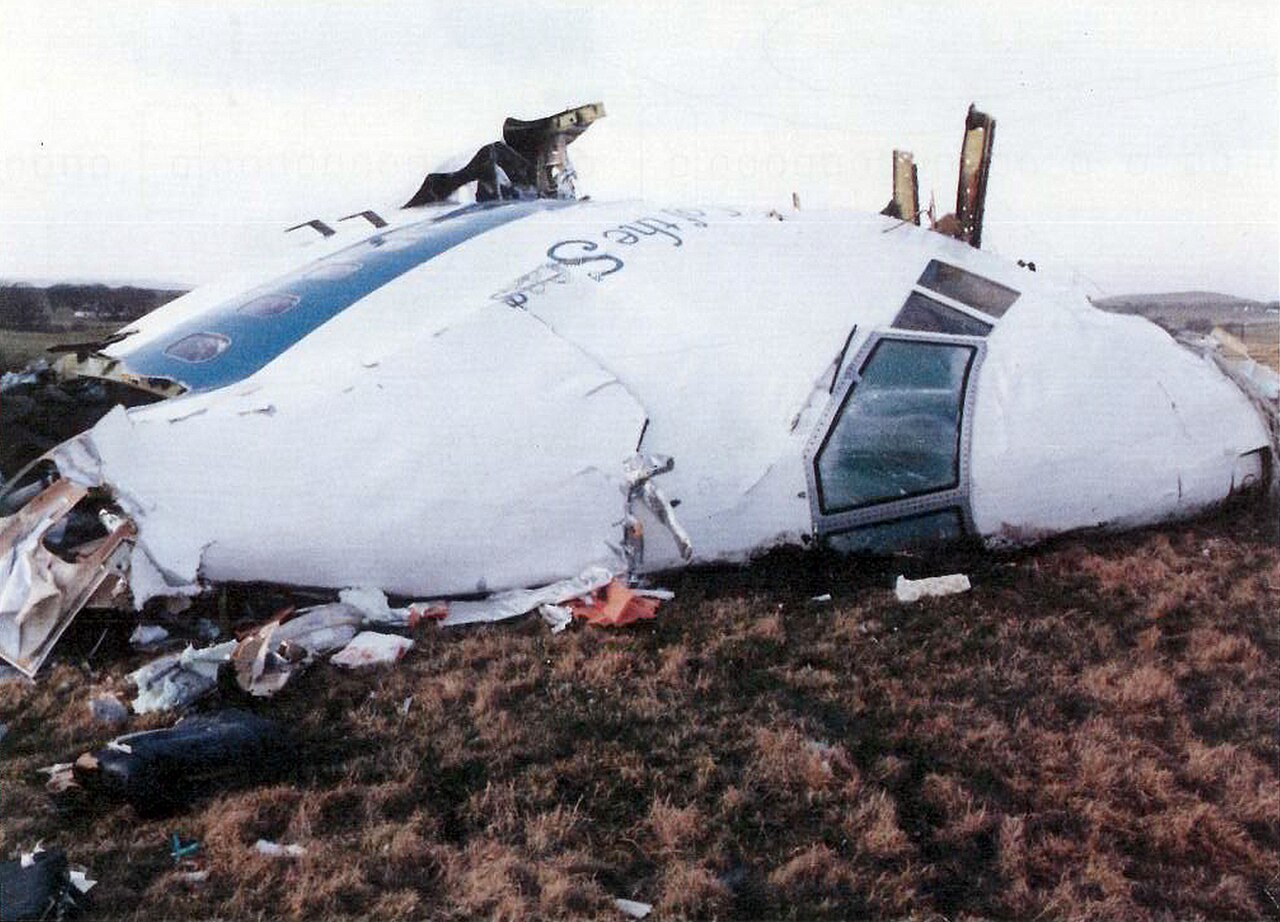
At the time, the prevailing assumption was that a plane hijacking was meant to serve as political or financial leverage for negotiations or political asylum. This concept began to change in the late 1980s. In 1988, the bombing of Pan Am Flight 103 over the town of Lockerbie, Scotland, caused by an explosive device hidden in a suitcase, led to the understanding that the threat was not limited to passenger hostage-taking, but included attempts to completely destroy the aircraft. Following this disaster, the principle of "passenger-baggage reconciliation" was implemented, strictly forbidding the transportation of a suitcase in the aircraft's cargo hold if the passenger registered to it is not on board.
The most dramatic and profound turning point in aviation history occurred during the terrorist attacks of September 11, 2001. The terrorist assault, which claimed the lives of 2,977 people, completely shattered old working assumptions. The aircraft itself was transformed from a platform for negotiation into a weapon of mass destruction, and the protocol of complying with hijackers collapsed once and for all. Passengers on one of the hijacked planes, United Flight 93, managed to overpower the hijackers—similar to what occurred on Flydubai Flight 1073—and prevented the aircraft from crashing into an intentional strategic target in Washington, D.C., though they were unable to recover the flight and crashed in the fields of Pennsylvania.
The institutional response arrived in the form of immediate structural and technological changes. In the United States, the Aviation and Transportation Security Act (ATSA) was signed into law, federalizing the security apparatus and establishing the Transportation Security Administration (TSA), thereby shifting responsibility from private security contractors to the state. Concurrently, armored, bulletproof, and blast-resistant cockpit doors were installed on all commercial aircraft, and opening them during flight was strictly prohibited. Furthermore, the Federal Air Marshal program was dramatically expanded.
Over the following decade, the security apparatus had to dynamically adapt to new methods utilized by terrorist organizations, which attempted to bypass standard metal detectors. In late 2001, terrorist Richard Reid attempted to detonate a PETN explosive device hidden in the sole of his shoe during a flight from Paris to Miami. Although passengers and crew overpowered him and the attack was thwarted, the incident led to a sweeping requirement to remove shoes and scan them through X-ray machines. Five years later, in 2006, British security services thwarted a plot by a terrorist cell to blow up about ten aircraft simultaneously using liquid explosives disguised as soft drinks. This disruption gave birth to the rigid restrictions on bringing liquids, gels, and aerosols in carry-on baggage. In 2009, an attempted bombing of a flight from Amsterdam to Detroit by Umar Farouk Abdulmutallab using explosive powder hidden in his underwear proved that a standard magnetometer was insufficient. Consequently, full-body scanners based on millimeter-wave technology, capable of detecting non-metallic objects, were integrated into airports.
An incident similar to the one on the Flydubai flight—but which ended tragically—occurred on Germanwings Flight 9525, a subsidiary of Lufthansa, which crashed on March 24, 2015, in the French Alps. The disaster claimed the lives of all 150 passengers and crew members on board, including one Israeli citizen. The aircraft, an Airbus A320, was en route from Barcelona, Spain, to Düsseldorf, Germany. About half an hour after takeoff, as the aircraft reached cruising altitude, the captain, Patrick Sondenheimer, left for the restroom, leaving the aircraft under the responsibility of the co-pilot.
Immediately upon the captain's departure, the co-pilot, Andreas Lubitz, locked the cockpit door from the inside, deactivated the emergency access code, and manually altered the altitude settings into a rapid dive. Black box recordings documented the captain attempting to break inside, knocking and shouting at Lubitz to open "the damn door." Lubitz himself maintained absolute silence, failing to respond to the captain's shouts or the air traffic control tower's attempts to establish contact, while the sound of his normal breathing could be heard up until the moment of impact with the mountain.
The post-disaster investigation revealed that Lubitz had a complex history of mental health struggles, severe depression, and anxiety over losing his vision. Just two weeks before the disaster, his doctor had even referred him for psychiatric evaluation due to symptoms of psychotic depression. Lubitz concealed his medical condition and the sick leave notes given to him from his employers, and had even rehearsed on flight simulators and searched online for suicide methods and cockpit locking mechanisms.

And Here at Home, in Israel
Due to our geopolitical situation, Israeli civil aviation anticipated global aviation by many years. While Western airlines began tightening their security protocols primarily in the 1970s and 1980s, El Al was forced to develop an independent, proactive, and multi-layered defense doctrine decades earlier. Over the years, this model—which combines technology, engineering fortification, and the human element—became a global gold standard and an object of emulation for many airports and countries.
The first turning point that shaped the Israeli paradigm occurred in July 1968, when El Al Flight 426 from Rome to Tel Aviv was hijacked by terrorists from the Popular Front for the Liberation of Palestine (PFLP) and diverted to Algeria. This was the only hijacking incident in the company's history that ended successfully for the hijackers. The event made it clear to the defense establishment that Israeli aircraft constituted a strategic target, and that foreign airport security authorities could not be relied upon worldwide. Consequently, El Al began placing armed, undercover agents—air marshals—on all of its flights, a solution that Western airlines adopted on a broad scale only decades later.
The effectiveness of this new method faced a dramatic test in September 1970, during the attempted hijacking of El Al Flight 219 from Amsterdam to New York. Terrorist Leila Khaled and her partner attempted to breach the cockpit armed with hand grenades. The aircraft's captain executed a sharp diving maneuver that caused the hijackers to lose their balance, while concurrently, the undercover air marshal opened fire, killing one of the hijackers and subduing Khaled. The incident thwarted the hijacking and proved the necessity of specially trained, inflight security personnel, alongside a resolute decision never to surrender to hijackers' demands while mid-air.
Simultaneously with the deployment of air marshals, El Al was a global pioneer in the physical fortification of aircraft. As early as the beginning of the 1970s, double, armored cockpit doors were installed on the company's aircraft—a "trap" mechanism that prevents direct access to the pilots even if a passenger manages to breach the first line of defense. This engineering concept, alongside rigid protocols forbidding the opening of the cockpit during flight, preceded by three decades the changes forced upon the global aviation industry following the September 11 attacks.
The most famous pillar of the Israeli security model is the human element and security profiling. Unlike most airports worldwide, which focus on physical searches for dangerous objects (such as weapons or liquids), the Israeli approach focuses on detecting a passenger's malicious intent. El Al's screening apparatus relies on skilled interviewers who conduct targeted risk assessments through direct dialogue, body language analysis, and cross-referencing behavioral data.
The vital importance of human profiling was conclusively proven in April 1986 in what became known as the "Nezar Hindawi Affair." Ann-Marie Murphy, a pregnant Irish citizen, attempted to board an El Al flight from London to Tel Aviv without knowing that her partner had concealed about a kilo and a half of plastic explosives and a timer mechanism within a false bottom of her suitcase. The suitcase passed through all the technological screening systems at Heathrow Airport in London without raising suspicion. Only the alertness of El Al's security officer, who grew suspicious of the passenger's background story during the interview, led to a meticulous manual inspection and the discovery of the explosive charge, thereby saving the lives of 375 passengers and crew members.
In recent decades, with the rise of global terrorist threats and the proliferation of man-portable air-defense systems (MANPADS) into the hands of non-state actors, security at El Al has expanded beyond the boundaries of the terminal and the passenger cabin. The company became the first in the world to equip its passenger aircraft with active missile defense systems (such as the "SkyShield" system), which utilize laser technology to disrupt ground-launched, heat-seeking missiles.