

The Israeli Pilots Association magazine

On the final day of August, August 31, 2026, an historic defense agreement was signed, representing nothing less than a geo-strategic earthquake. The State of Israel and Greece signed the largest defense export deal in Israel's history – the "Achilles' Shield" project. Valued at a staggering 3.1 billion euros (approximately 3.6 billion dollars), the deal was approved a few months ago by the Hellenic Parliament. Greece is shedding its outdated Russian and European systems and entrusting the defense of its skies, from Athens to the popular tourist islands in the Aegean Sea, to three advanced Israeli missile systems.
Anyone tracking the current threat matrix understands that this is not merely a military procurement, but a fundamental recalibration of the regional balance of power.
The political and strategic significance of this deal extends far beyond the borders of the Mediterranean. Recently, we have witnessed the solidification of a Sunni alliance consisting of Turkey, Egypt, Saudi Arabia, and the Gulf States, which aims to set the tone in the Middle East and the Mediterranean basin. In August 2026 three powerful Muslim countries signed the Mecca Joint Defense Agreement (That, alas, failed miserably in its first test when the Houthis attacked Saudi Arabia and none of its new 'allies' rushed to its aid).
While their relations were previously characterized by internal power struggles (for instance, over Turkey's support for the Muslim Brotherhood against the Egyptian and Saudi regimes), recent years have brought a sweeping reconciliation process driven by critical economic and security interests. This alliance seeks to establish absolute dominance in the Middle East and the Mediterranean basin, serving both as a counterweight to the Iranian-led Shiite axis and as a mechanism to diminish Western and Israeli influence in the region. The military buildup of these nations—led by Turkey with its expanding drone and missile industry, and Egypt with its massive naval procurement—creates an immense regional power complex. Against this axis, the tight operational and technological bond between Jerusalem and Athens creates a powerful counterweight. Together with Cyprus, the third prong of this triangle, a significant barrier is taking shape against Turkish expansionist ambitions.
For Greece, the deal provides a direct response and creates an effective deterrence against the territorial ambitions of Turkey and President Erdogan. Even though both nations are NATO members, Greece faces a constant threat from Turkey, which harbors designs on several of its islands. In the past, Turkey even invaded Cyprus, capturing the northeastern part of the island, which it occupies to this day. Turkey possesses a self-produced ballistic missile arsenal (such as the "Tayfun" missile) and a massive strike drone fleet (the Bayraktar family) that threatens Greek sovereignty over the islands. "Achilles' Shield" makes it clear to Ankara that the skies over the Aegean are far less penetrable than previously estimated.
For Israel, the political and economic value is phenomenal: a NATO member state chooses to replace its Russian systems (such as the S-300 and Tor-M1) with blue-and-white defense systems, thereby cementing Israel's status as a technological superpower precisely during a period of complex diplomatic pressures.
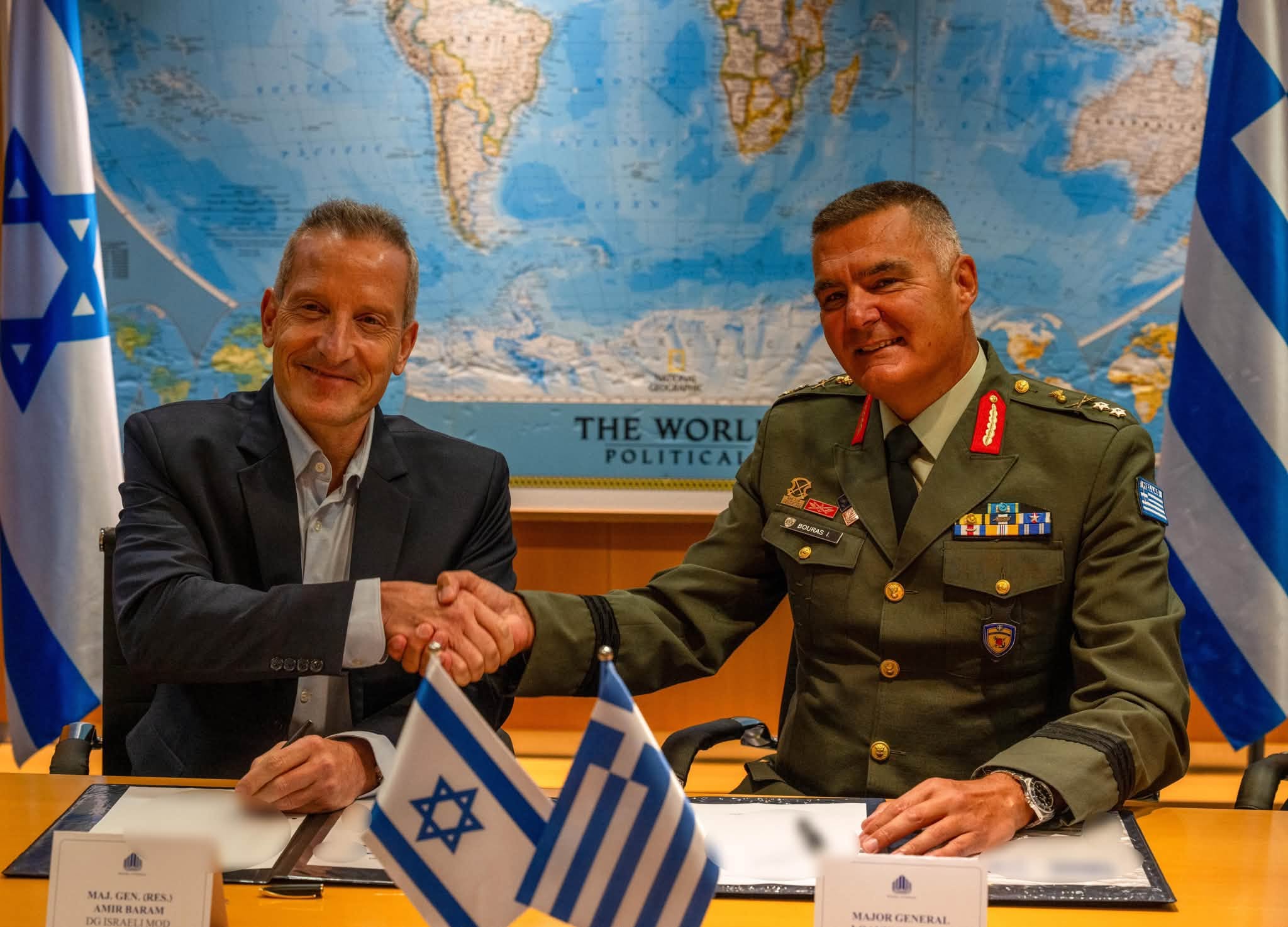
The "Achilles' Shield" deal is not an isolated event, but a link in a chain of mega-deals that are subverting the familiar paradigm. In recent years, we have witnessed a fascinating, almost hypocritical dissonance in European-Israeli relations: while vocal condemnations, boycott attempts, and a distancing from Jerusalem are heard within the continent's political, academic, and cultural arenas, in the defense arena, existential interest trumps politics. European leaders understand that in the new geopolitical reality, Israeli technology is the difference between sovereignty and occupation.
This trend was manifested in two ground-breaking mega-deals that preceded the current agreement:
Reality proves that the Israeli defense export market is not only unharmed but is experiencing an unprecedented boom. Israel's proven operational experience (Combat Proven) against complex, multi-arena threats in a war that has been ongoing for nearly 3 years has turned the Israeli defense industry into a critical commodity that Europe simply cannot afford to boycott.
At the core of the Greek project lies a conceptual shift, replicating the multi-layered defense architecture of the Israel Air Force within the Hellenic Air Force. The Israeli systems, along with some of Greece's existing systems like the American Patriot system, will be connected via a single national command and control (C2) center driven by Artificial Intelligence (AI). This center can analyze threats in real-time and recommend the most cost-effective interceptor. The deal includes three distinct layers integrated into Greece's existing Patriot batteries:
The Israeli radar array integrated into the "Achilles' Shield" deal provides an unprecedented operational response to threats from the east through three core technological capabilities:
While this deal injects massive sums into Israeli defense industries, it was also cleverly designed to reward the local Greek economy, ensuring the project's approval in the Hellenic Parliament. As part of the agreement and Greece's request for source code access and maintenance independence, the Greek defense industry will locally manufacture approximately 25% of the project's volume. Around 12 Greek companies will be integrated as subcontractors, securing contracts worth over 700 million euros.
The "Achilles' Shield" project is clear evidence that on the modern battlefield, proven operational experience and cutting-edge technology triumph over politics. Within 35 months, Greece will complete a total architectural overhaul of its skies. The built-in interoperability of Israeli technology will grant Greece strategic peace of mind, and provide Israel with a true partner, armed to the teeth with Israeli technology, in the heart of the Eastern Mediterranean.